






American Heart Month: 8 Steps to a Healthier Life
American Heart Month: 8 Steps to a Healthier Life
February 10, 2026
 Did you know heart disease is the leading cause of death in the United States? About half of all Americans have at least one key risk factor associated with heart disease (high blood pressure, high cholesterol, and being a smoker). The good news is that everybody, regardless of age and family history, can make healthy lifestyle choices to lower their risk of heart disease.
For American Heart Month, the NYCDCC Fund Office is sharing tips and resources from the American Heart Association. By making healthy changes both big and small, you can improve your quality of life and lower your risk of heart attack and stroke. We encourage you read and share with your families, communities, and fellow members.
Heart-Healthy Behaviors & Factors
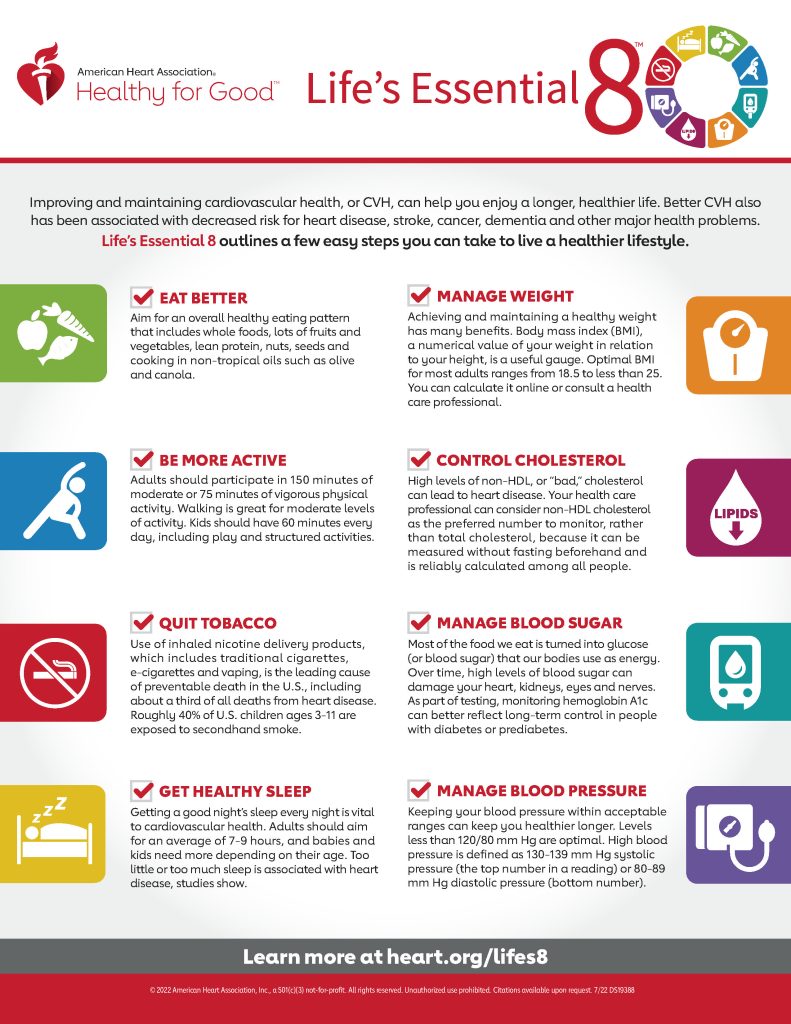
The American Heart Association recommends the following Essential 8 habits for improving and maintaining cardiovascular health:
1. Eat Better
Aim for an overall healthy eating pattern that includes whole foods, lots of fruits and vegetables, lean protein, nuts, seeds, and cooking in non-tropical oils such as olive and canola.
2. Be More Active
Adults should get 2 ½ hours of moderate or 75 minutes of vigorous physical activity per week. Kids should have 60 minutes every day, including play and structured activities.
3. Quit Tobacco
Use of inhaled nicotine delivery products, particularly cigarettes, are the leading cause of preventable death in the United States. While e-cigarettes and vaping are newer and their long-term impacts are still being studied, traditional cigarette smoking remains the primary driver of preventable mortality.
4. Get Healthy Sleep
Most adults need 7-9 hours of sleep each night. Children require more: 10-16 hours for ages 5 and younger, including naps; 9-12 hours for ages 6-12; and 8-10 hours for ages 13-18. Adequate sleep promotes healing, improves brain function and reduces the risk for chronic diseases.
5. Manage Weight
Achieving and maintaining a healthy weight has many benefits. Body mass index, a numerical value of your weight in relation to your height, is a useful gauge. Optimal BMI is less than 25, but less than 18.5 is considered underweight. You can calculate it online or consult a health care professional.
6. Control Cholesterol
High levels of non-HDL, or “bad,” cholesterol can lead to heart disease. Your health care professional can consider non-HDL cholesterol as the preferred number to monitor, rather than total cholesterol, because it can be measured without fasting beforehand and is reliably calculated among all people.
7. Manage Blood Sugar
Most of the food we eat is turned into glucose (or blood sugar) that our bodies use as energy. Over time, high levels of blood sugar can damage your heart, kidneys, eyes and nerves. As part of testing, monitoring hemoglobin A1c can better reflect long-term control in people with diabetes or prediabetes.
8. Manage Blood Pressure
Keeping your blood pressure within acceptable ranges can keep you healthier longer. Levels less than 120/80 mm Hg are optimal.
To learn more about these recommendations and more from the American Heart Association, visit https://www.heart.org/en/healthy-living/healthy-lifestyle/lifes-essential-8