





Seasonal Affective Disorder (SAD): 4 Things To Know
Seasonal Affective Disorder (SAD): 4 Things To Know
December 9, 2025
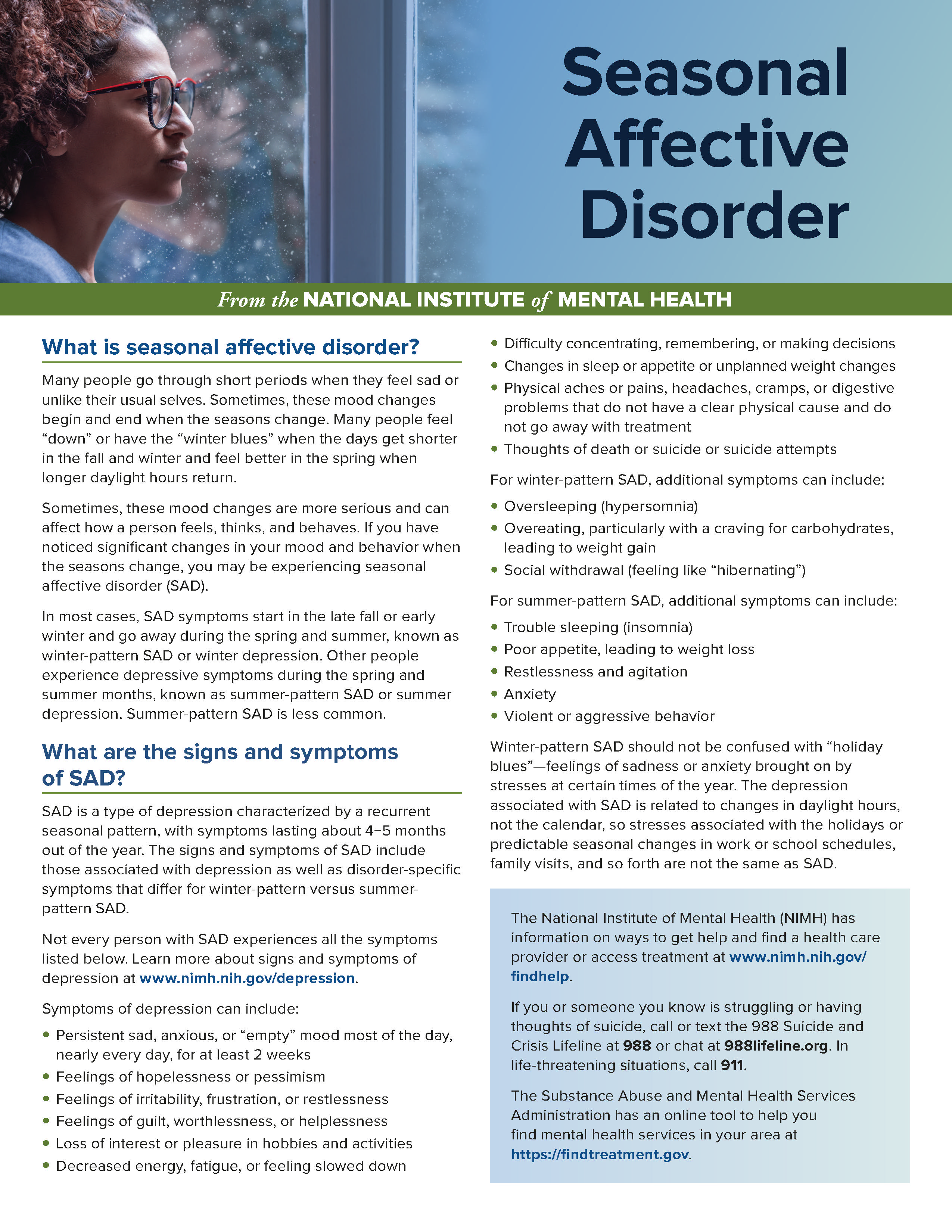 Did you know Seasonal Affective Disorder affects 10 million Americans every year? December is Seasonal Affective Disorder Awareness Month, and the Fund Office would like to share information about this type of depression with our members and the NYCDCC community.
1. What is Seasonal Affective Disorder?
Seasonal Affective Disorder (or SAD for short) is a type of depression that’s related to changes in season. In most cases, SAD symptoms begin in late fall and early winter as the days become shorter. As days become shorter, the lower levels of sunlight may affect your body chemistry by altering your levels of melatonin (which increases sleepiness), and serotonin (which regulates mood).
2. What are Symptoms of SAD?
Many SAD symptoms are similar to those of major depression, including:
– Low energy and feeling sluggish
– Feelings of sadness most of the day, nearly every day
– Trouble concentrating
– Oversleeping
– Weight gain
– Anxiety
– Social withdrawal
– Suicidal thoughts or behavior
3. What treatments are available for SAD?
People often don’t get the mental health services they need because they don’t know where to start. If you are experiencing one or more of the above symptoms, consult your healthcare provider to determine the best course of treatment for you.
There are several ways to treat SAD, including:
– Vitamin D
– Psychotherapy (“Talk Therapy”)
– Light Therapy
– Antidepressant medications
Additional Advice for treating SAD symptoms, provided by Johns Hopkins Medicine:
– Get help. If you think you may be depressed, see a healthcare provider as soon as possible.
– Set realistic goals considering the depression. Don’t take on too much. Break large tasks into small ones, set priorities, and do what you can as you can.
– Try to be with other people and confide in someone. It is often better than being alone and secretive.
– Do things that make you feel better. Going to a movie, gardening, or taking part in religious, social, or other activities may help. Doing something nice for someone else can also help you feel better.
– Get regular exercise.
– Eat healthy, well-balanced meals.
– Stay away from alcohol and illegal drugs. These can make depression worse.
– Delay big decisions until the depression has lifted. Don’t make a big change right away, such as getting a new job or getting married or divorced. Talk it over first with others who know you well. They will likely have a more objective view of your situation.
– People don’t often snap out of a depression. But they can feel a little better day by day.
– Try to be patient and focus on the positives. This may help replace the negative thinking that is part of the depression. The negative thoughts will go away as your depression responds to treatment.
– Let your family and friends help you.
Learn more about Seasonal Affective Disorder here: https://www.hopkinsmedicine.org/health/conditions-and-diseases/seasonal-affective-disorder-what-you-should-know
4. How can the NYCDCC MEND Program help.
As a part of its focus on fostering a healthy work and life-balance for its members and their dependents, the New York City District Council of Carpenters Welfare Fund has launched the Members Education and Network for Dependency (“MEND”) Program, which gives participants and their dependents access to confidential treatment for mental health issues and substance abuse.. The program is located at 395 Hudson Street, New York, NY 10014, on the 5th floor
Visit our MEND homepage here: https://nyccbf.org/news-media/mend-program-and-wellness/
If you or one of your dependents is struggling with substance abuse or mental health issues, please contact the MEND Program for assistance from our accredited staff. The MEND program can be reached by phone at (212) 366-7590 or by email at MEND@nyccbf.org. Please remember that there is no shame in asking for help, that MEND operates under strict confidentiality restrictions, and that we are here to help you and your family.